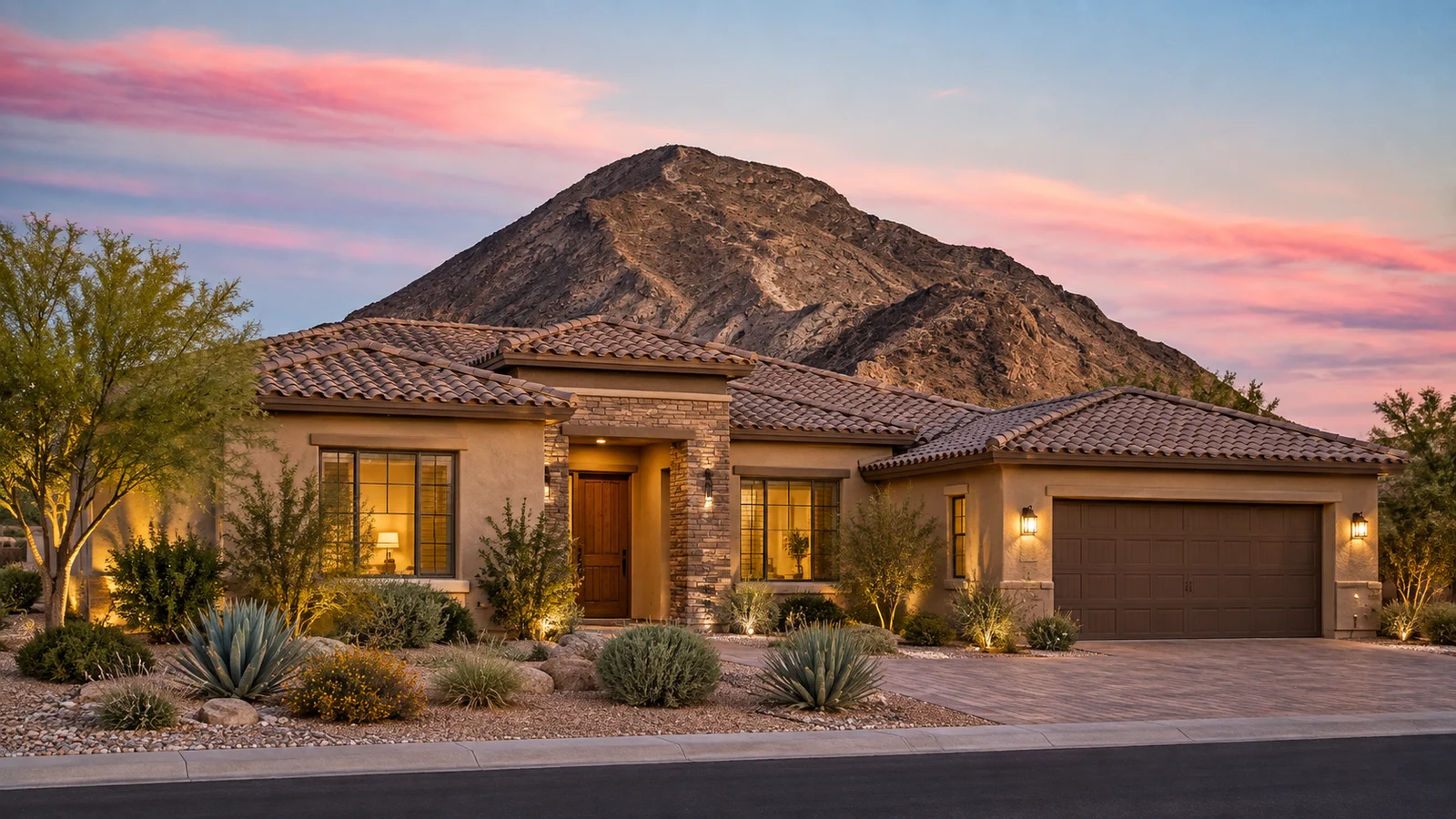
Let the landmark help you get oriented.
Lone Mountain stands apart from the surrounding valley. On a first visit, use it as a point of reference while exploring nearby streets and parks. The setting can change noticeably between a home facing open land and one deeper into a residential area.
A mountain in a listing photograph does not guarantee a view from the home. Visit the rooms and outdoor spaces where you would spend time, and consider orientation, neighboring properties and any questions about surrounding land.
Recreation around the mountain.
Clark County lists trails and outdoor recreation at Lone Mountain Park, including picnic spaces, courts and equestrian facilities. Check the specific park address and current information before heading out.
- Lone Mountain Park: paths, recreation and picnic areas near the mountain.
- Outdoor routes: inspect trail conditions and plan for the weather before a walk.
- The property’s setting: compare actual access to parks with the location shown on a map.
A property-by-property comparison.
Do not use the area name as a shortcut for association rules, lot rights or upkeep. Ask which documents apply to the property, review any restrictions and verify the details important to your plans.
On a tour, consider access, parking, the use of outdoor space and the condition of the home’s systems. Separate features you can readily change from the location and layout you will live with every day.
Talk about a particular home.
For buyers, share the type of home and setting you are looking for. For sellers, start with your address, condition and timing. Cliff can help focus the discussion on relevant comparable properties and the practical decisions for your move.